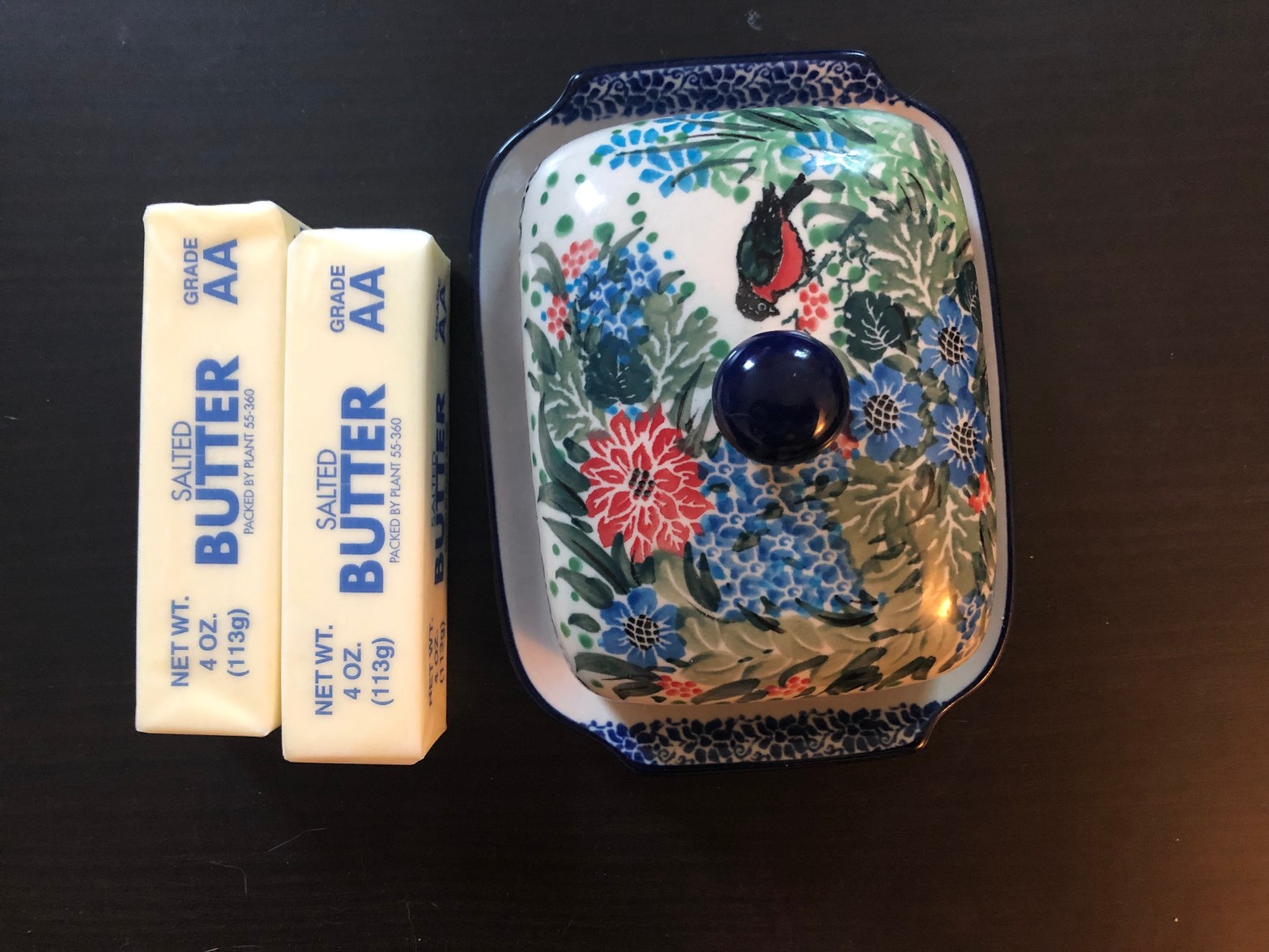
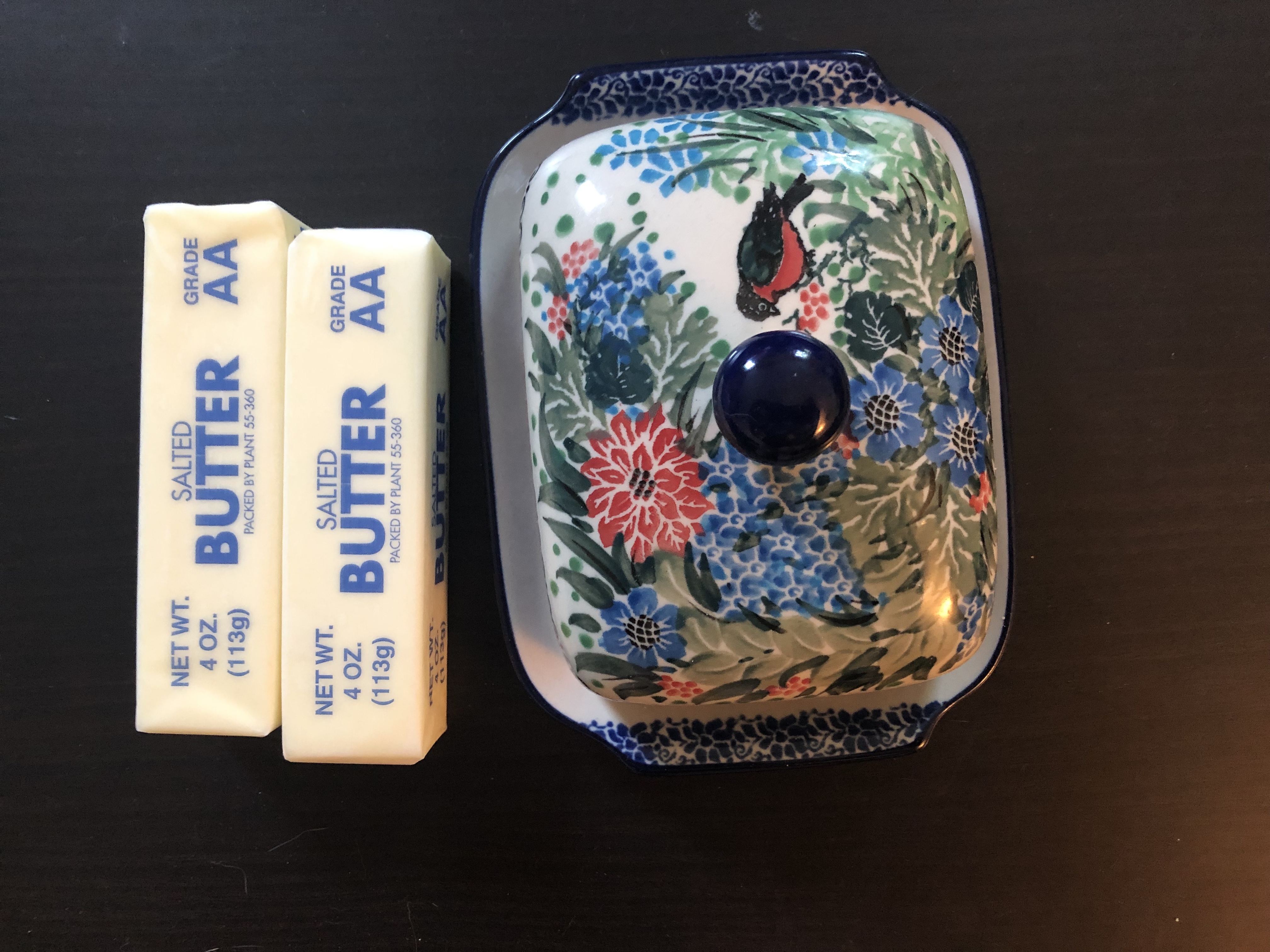
Here I am, wishing to bake a cake for my husband and I to devour later, but like most cake recipes, I need softened or room temperature butter. Well friends, the only butter I have is a solid, cold block in the fridge. What do I do?
Slow, pre-planned softening: Sometimes, I have planned baking days for which I can put butter out the night before or the morning of. I love putting my butter out the night before, because it will guarantee softened butter every time. However, the morning of or a couple hours before baking (especially in warmer months), you can slice your butter into tablespoons, spread them out on a dish, and leave them out to soften just like that. The butter softens much faster once sliced up and able to reach the warmth of the room better. Butter is essentially fat and salt, so leaving it out at room temperature for extended periods of time will not harm you or your family (I’m talking to you, Mom!). Fat and salt have curative properties that keep things shelf-stable for a while! However, if you are one to keep softened butter out on a butter dish, like me, you want to keep an eye on the quality of the butter as time goes by. Color and taste can change after being left out for weeks, though it is still fine to eat.
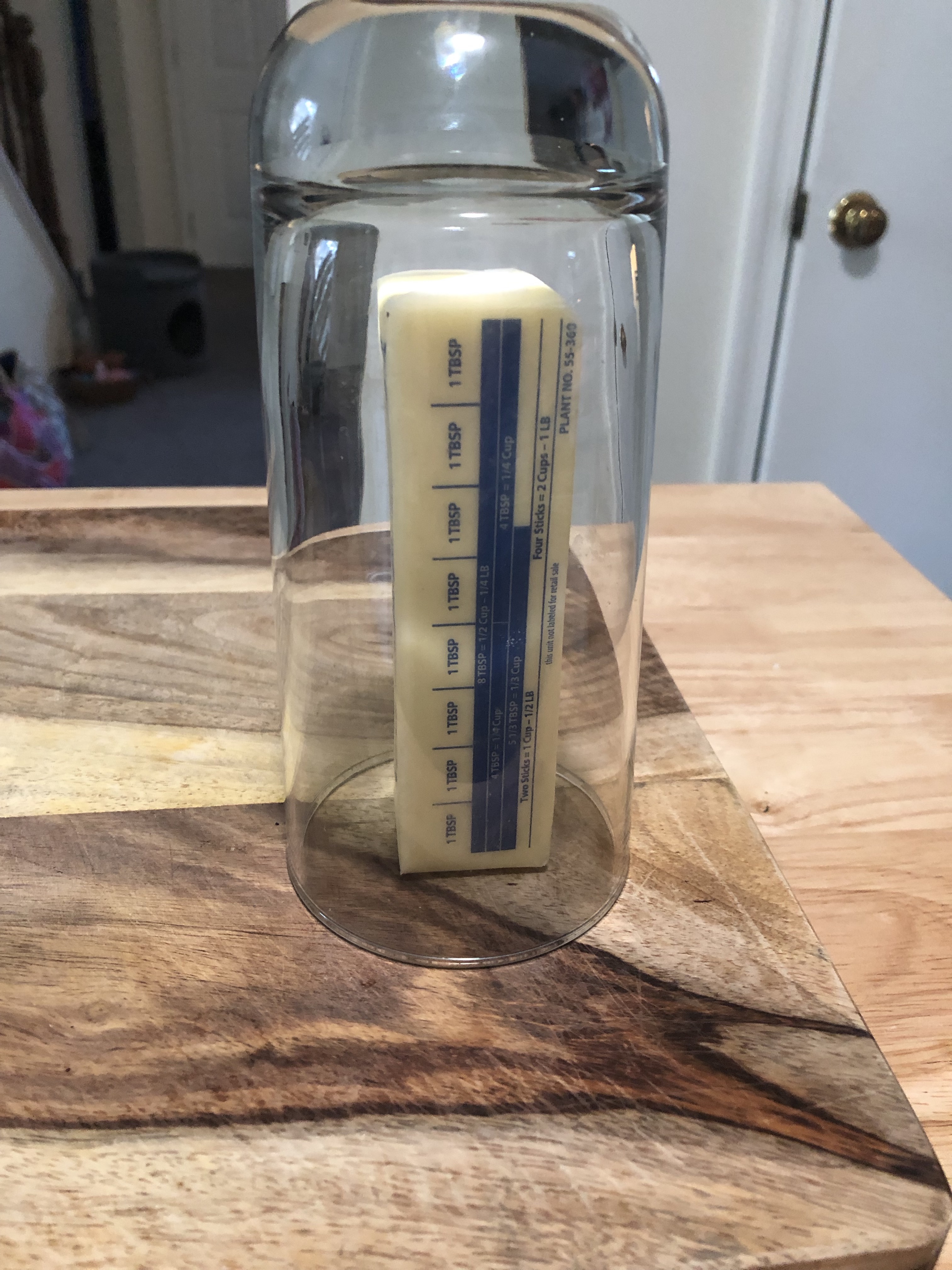
The hot glass method: If you’re like me right now and don’t have large quantities of softened butter at the ready, here’s a method that can help. Fill a tall glass with water- make sure the glass can fit around a stick of butter while it stands upright. Microwave the glass of water until nearly boiling, 2-3 minutes usually. With oven mitts, carefully remove the glass and immediately pour the hot water down the drain or into another glass/bowl (if you need to use it again and want to save water), and place the now very hot glass over a stick of butter. Leave it there until the glass is cool enough to remove with your hands and check your butter. It should be softened, but may need another go with the hot glass. This method works well to evenly soften the entire stick of butter, though it can be a bit time-consuming.
The microwave method: Microwaving butter is a tricky business, walking the line between softened butter and completely melted puddles. Here’s how to do it successfully. Slice your needed butter into tablespoons and spread them out on a microwave-safe plate. Like in the slow softening strategies, slicing the butter and spreading it out allows for more of the butter surface to warm up more quickly. Warm the plate of butter in the microwave in 5 or 6 second increments (no longer than that!), taking the plate out and feeling the butter to see if it gives under your fingertip and leaves an imprint. I usually have to do this 3 times to soften 2 sticks of sliced butter. I often shift the pieces around as well to make sure they are evenly softened. This method also works best for recipes that call for butter softened to a specific temperature (like in Stella Parks’ Bravetart cookbook, which is life-changing). Repeat the microwave increments and test with an instant read thermometer until it reaches the desired temperature.
One last tip: If a recipe calls for softened or room temperature butter, it is super important that it actually is softened butter, and not melted butter. The difference can change the texture of your baked goods drastically.
Happy baking! And remember- butter makes everything better.
-Jess


One thought on “Butter Softening 101”